


I provide developmental coaching in two settings: inside embedded organisation-design engagements, for the leaders carrying the change (usually the CTO or VPE and their reports), and a small number of standalone places for senior product and engineering leaders, held fortnightly. I coach only a handful of leaders at once; when the practice is full I say so, and I’ll refer you to someone I trust. This page sets out how the coaching runs, what stays confidential, and where its limits are. Every coachee receives a written welcome letter covering this agreement before the first session; the current version is public at that link.
Developmental Coaching for Engineering Leaders
What coaching is, and isn’t
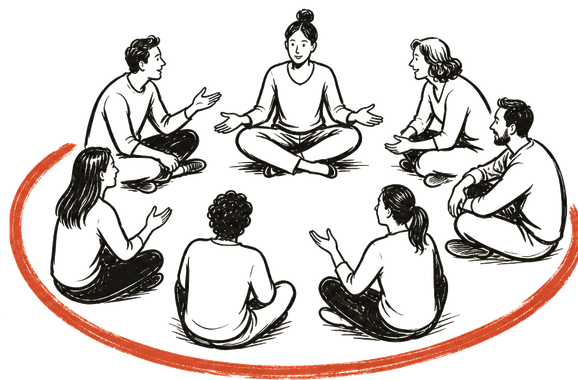 The International Coaching Federation defines coaching as partnering with clients in a thought-provoking and creative process that inspires them to maximise their personal and professional potential. In coaching mode I don’t provide solutions or organisational advice; I help you find your own. We work on choices under pressure, the patterns that narrow what you can see, and how you show up with other people. Often the work is the strategic trade-off you’ve been avoiding. That’s a different activity from the mentoring, teaching, and facilitation I also do inside an engagement, and the difference matters enough that it gets its own confidentiality rule below.
The method
 My primary method is Alētheia, which its founder Steve March describes as fourth-generation developmental coaching; my training in it is named, with dates, on the vetting page. Day to day it means parts work (the part of you that pushes and the part that brakes both get a hearing), close attention to the sensations in your body, and tracking how experience unfolds in the session. It starts from the question what if nothing is missing? and works with what gets in the way. (Alētheia is a Greek word for unconcealment: the truth was always there, and the work is uncovering it.) I trained in other approaches first (Co-Active, motivational interviewing, mindfulness-based practice) and use Alētheia because, in my experience with real clients, it goes deepest. Alongside it, I make occasional use of techniques from Radix somatic work, Co-Active, and Motivational Interviewing as appropriate. Across the methods, that is several hundred hours of formal training.
The two confidentiality rules
Inside an engagement I wear two hats, and each carries its own rule, named before anyone tells me anything.
Coaching runs under the Vegas rule.
Mentoring and advisory conversations run under the Chatham House rule.
Where coaching ends and clinical care begins
 I do developmental coaching, not therapy. The method is trauma-informed, but I don’t diagnose or treat trauma or mental-health conditions. At that boundary my job is the referral: I hold a standing referral relationship with a licensed counsellor whose practice includes trauma work and who sees clients online, and I’ll help you look for care in your locale. If the work gets heavier than coaching should carry, what happens next (pausing, referral, urgent support) is contracted in writing before we start.
Recordings, if you agree to them
 I’m in ongoing supervision, and the standard discipline is that a supervisor sometimes reviews session recordings. With your written consent I also use recordings for my own craft: I run the call through an AI model (such as Claude) afterward to sharpen how I work and to surface follow-ups I didn’t catch in the room. No model I use trains on your data. You can say no, and you can revoke consent at any time without giving a reason: I stop recording and delete what exists. My supervisors are bound by the same ethics I am. I store recordings securely and delete them within 120 days, sooner when no longer needed. Declining changes nothing about the coaching you receive.
Practicalities
 Sessions run about 50 minutes, usually every other week, on Zoom. You set the agenda; a day or two of reflection beforehand gives us more to work with. Video is required, because part of the work is noticing what your body is doing. I make room for bandwidth, access, and privacy needs without ceremony. I work from New Zealand; we’ll find an overlap that suits your timezone.
Ending
 You can end coaching at any time; it should continue only while it serves you. I ask for one closing session, to consolidate what you’ve built and part with clarity. Internal coaching typically ends with the wider engagement, but in some cases I can continue working with clients on an individual basis.
Coaching usually travels with my organisation-design work. Either way, vet me first: the vetting page shows you how, for me or for anyone doing this kind of work.